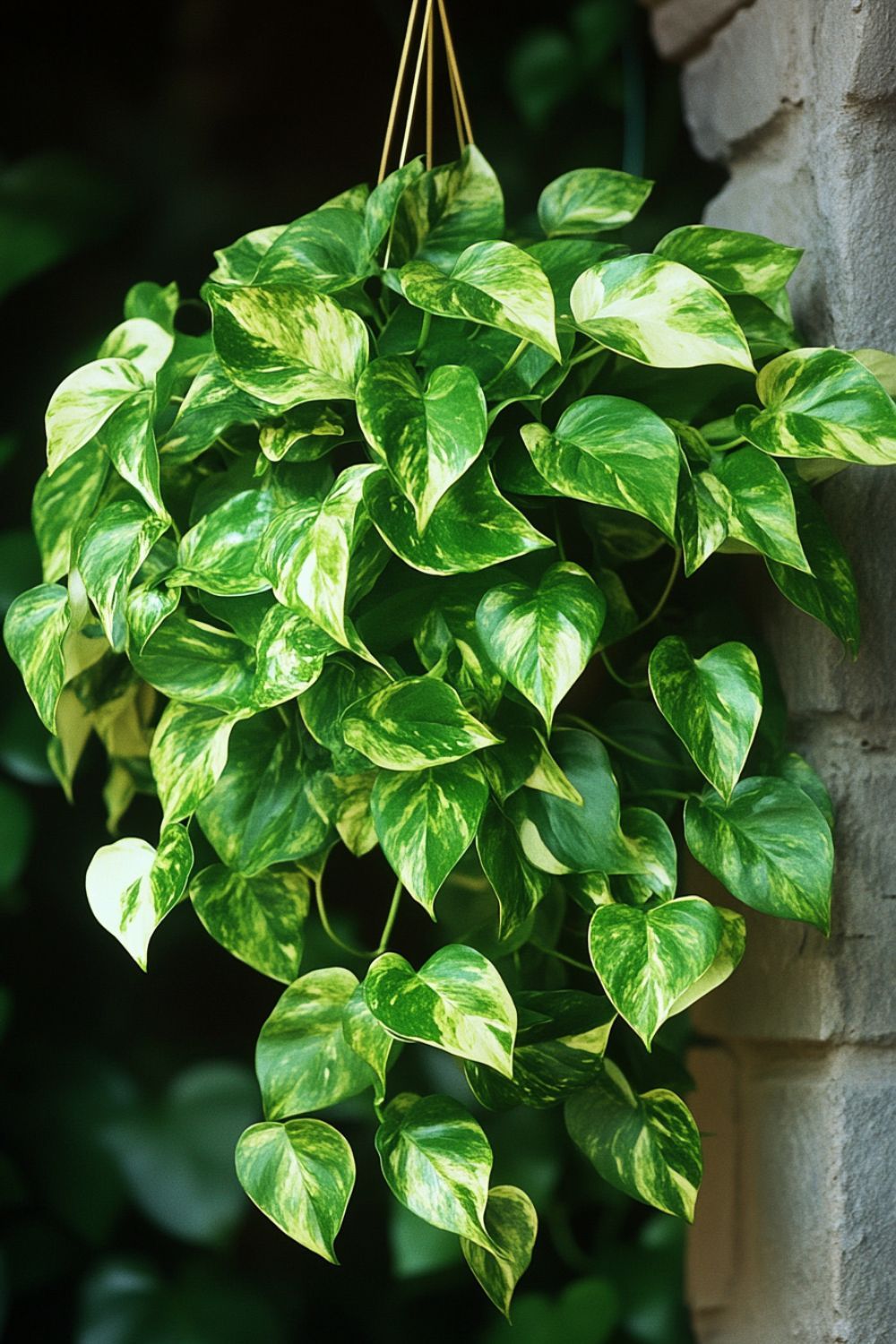
🌿 Hello, Pothos Lover! Meet Your Indestructible Houseplant
If you live in the U.S. and are looking for a houseplant that’s virtually impossible to kill, can purify your air, and makes any space look instantly lush—look no further than the Pothos (also known as Devil’s Ivy).
From the dry heat of Arizona to the humid air of Florida, Pothos plants thrive indoors across the States. This guide breaks down everything a U.S. homeowner or apartment dweller needs to know to grow a stunning, trailing Pothos.
🏡 Chapter 1: Pothos Essentials for Your Home
1. Light: The Sweet Spot is Bright, Indirect
Pothos is famous for tolerating low light, but to achieve those long, cascading vines and vibrant leaf colors, aim for:
- Best Location: Near an East or North-facing window, or several feet back from a sunny South or West-facing window (where the light is bright but never direct).
- Variegation Tip: Varieties like ‘Golden Pothos’ or ‘Marble Queen’ need brighter light to keep their unique cream or yellow splashes. In low light, they may “revert” to solid green.
- A Warning: Direct, unfiltered sunlight (especially through a window in the afternoon) will scorch and burn the leaves, leaving brown, crispy spots.
2. Water: The Soak-and-Dry Method
The #1 killer of houseplants in America is overwatering. Pothos is no exception!
- The Rule: Wait until the top 1 to 2 inches of soil are completely dry before watering again.
- The Sign: Your Pothos will tell you it’s thirsty! Its leaves will look slightly limp or droopy. Water it thoroughly until water runs out of the drainage holes.
- Seasonal Adjustment: You’ll water more frequently during the active growing season (Spring and Summer) and much less often during the dormant season (Fall and Winter).
3. Temperature & Humidity: Average Home is Perfect
Pothos is a tropical native, but it adapts well to standard indoor living conditions.
- Temperature: It thrives in typical room temperatures, generally between 65°F to 80°F (18°C to 27°C). Keep it away from cold winter drafts near windows or front doors, and also away from heat registers or air conditioning vents.
- Humidity: While it loves high humidity (great for placing it in a kitchen or bathroom), it is very tolerant of the drier air common in U.S. homes, especially in winter when the heat is on. You can use a humidifier or occasionally mist the leaves to keep the tips from getting brown.
🌱 Chapter 2: Common Varieties & Where to Find Them
Pothos is readily available at most Home Depot, Lowe’s, or local nurseries across the country. Here are the most popular varieties you’ll encounter:
| Variety Name | Key Feature | Care Tip |
| Golden Pothos | The most common. Green leaves splashed with bright yellow/gold. | Fastest grower; great for beginners. |
| Jade Pothos | Solid, deep emerald-green leaves. | Best option for low-light corners, as it has no variegation to lose. |
| Marble Queen | Heavily variegated with white and cream against green. | Needs brighter indirect light to maintain its high white color. |
| Neon Pothos | Vibrant, chartreuse (yellow-green) leaves. No variegation. | The color pops best in bright light. |
| N’Joy / Pearls and Jade | Newer, smaller leaves with distinct, blocky patches of white and green. | Slower grower; avoid direct sun to protect the white parts. |
🛠️ Chapter 3: Troubleshooting for U.S. Climates
| Problem | Cause (U.S. Context) | Solution |
| Yellow Leaves | Overwatering (The most common reason!) | Let the top few inches of soil dry completely. Ensure the pot has a drainage hole. |
| Brown, Crispy Leaf Tips | Low Humidity / Underwatering (Especially common during winter heating) | Increase humidity with a pebble tray or humidifier. Water thoroughly when the soil is dry. |
| Slow or Stunted Growth | Low Light or Winter Dormancy | Move it closer to a brighter window. Remember growth naturally slows down from Fall to Spring. |
| Long, “Leggy” Vines | Needs Pruning or More Light | Trim the vines to encourage bushier growth. Move to a brighter spot to keep the leaves closer together. |
| Drooping Leaves | Thirsty! (The “cry for help” sign) | Give it a good, thorough drink. It should perk up within a few hours. |

🪴 Chapter 4: Repotting & Propagation
1. Repotting (Every 1-2 Years)
Pothos can tolerate being slightly root-bound. You know it’s time to repot when:
- Roots are spiraling around the edge of the soil ball.
- Roots are poking out of the drainage hole.
How To: Repot in the Spring. Choose a new pot that is only 1 to 2 inches larger in diameter than the previous one. Use a standard, well-draining houseplant potting mix.
2. Easy Propagation (The DIY Way)
Want a new plant for your friend or office desk? Pothos is the easiest plant to propagate!
- Cut: Use clean scissors to cut a vine, ensuring your piece has 3-4 leaves and at least one “node” (the small bump where the leaf meets the vine, and where the roots will grow).
- Water: Place the cutting in a glass of tap water, making sure the node is submerged.
- Wait: Keep the glass in bright, indirect light. You will see roots form in a few weeks.
- Plant: Once the roots are a couple of inches long, you can plant the new Pothos in a small pot of soil!
Pro Tip for U.S. Gardeners: Pothos is invasive in warm, frost-free regions (like parts of Florida and Hawaii). Never plant Pothos outdoors in these areas. Keep it as a beautiful, contained houseplant!




Leave a Reply