Introduction: More Than Just Blue and Yellow
IKEA (Ingvar Kamprad Elmtaryd Agunnaryd) is far more than a furniture store; it’s a global phenomenon built on accessible design. Founded in Sweden in 1943, IKEA’s mission—to create a better everyday life for the many people—revolutionized how the world approaches home furnishings and interior design.
As one of the world’s largest furniture retailers, IKEA’s success offers a masterclass in blending utility, cost efficiency, and style. This deep dive explores the core philosophies and unique business strategies that drive the IKEA brand’s dominance.
Pillar 1: The Philosophy of Democratic Design
IKEA’s products adhere to the principle of Democratic Design. This holistic approach ensures every item is rigorously evaluated across five non-negotiable criteria.
| Design Criterion | Why It Matters (The Benefit) |
| Low Price (Affordability) | Makes Scandinavian design and quality accessible to the mass market. |
| Function | Products must solve practical, everyday home life problems efficiently. |
| Form (Aesthetics) | Focuses on simple, modern, and minimalist design that is globally appealing. |
| Quality | Ensures durability and long-term value, justifying the purchase. |
| Sustainability | A commitment to using responsibly sourced materials and reducing environmental impact. |
Export to Sheets
This commitment to balanced design is what elevates IKEA furniture beyond mere low-cost production.
Pillar 2: The Revolutionary Flat-Pack Business Model
The most distinctive feature of the IKEA business model is its innovative approach to logistics and manufacturing. This strategy is the engine that drives its low-price promise.
- Flat-Pack Logistics: Designing furniture to be disassembled into flat packages dramatically reduces shipping volume. This innovation lowers transport costs, minimizing the price passed on to the consumer.
- Customer Participation (Self-Assembly): By empowering customers to take ownership of the final assembly, IKEA offloads labor costs. This self-assembly model is a direct component of the brand’s low pricing strategy.
- Supply Chain Control: IKEA’s strict control over the entire supply chain, from raw materials to the store floor, ensures efficiency and cost-effectiveness at every stage.

Pillar 3: The Immersive Retail Experience
The physical IKEA store is strategically designed to maximize inspiration and sales.
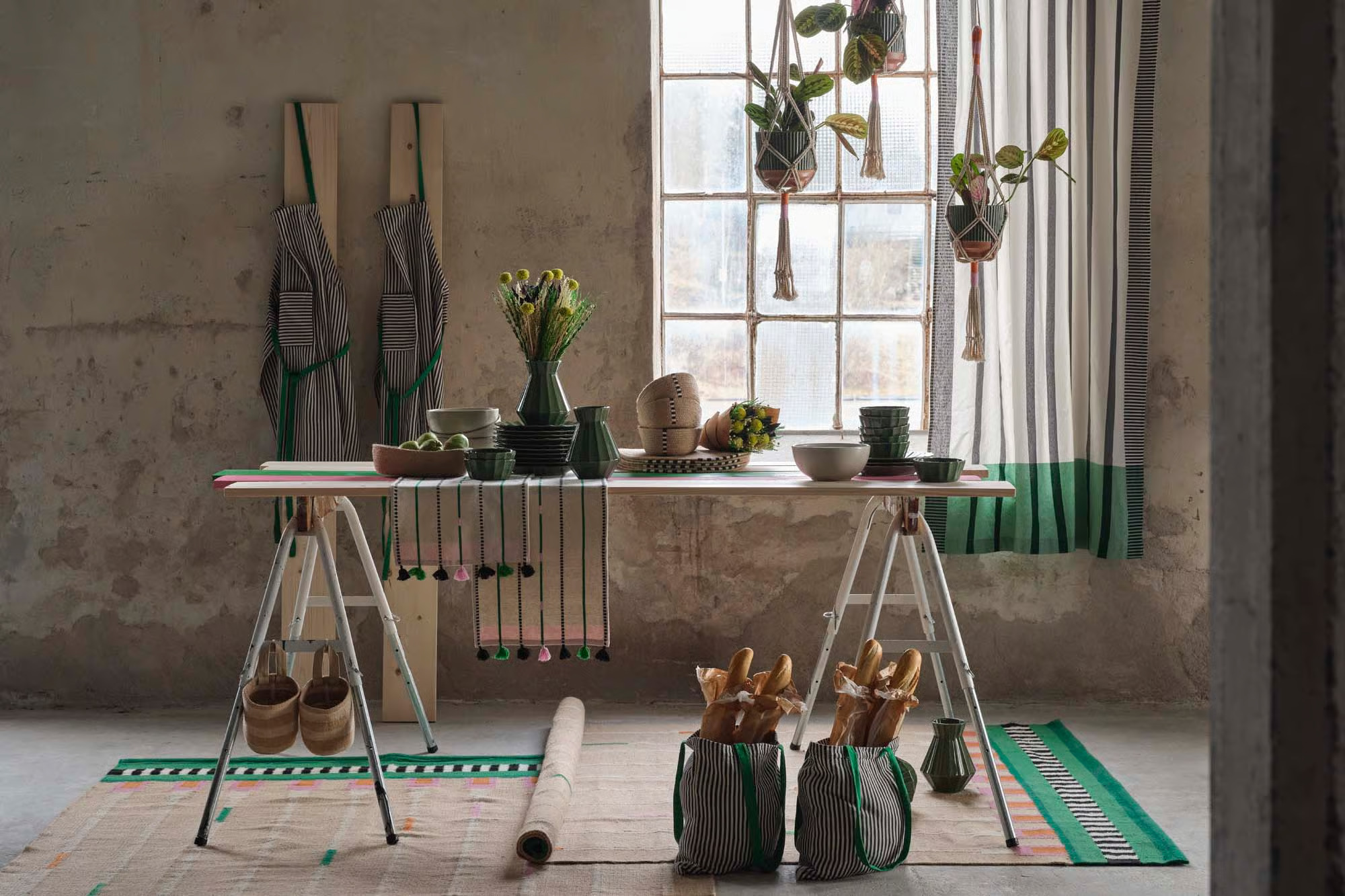
- Showroom Inspiration: Stores are laid out as immersive room sets, offering complete interior design solutions rather than just rows of products. This helps customers visualize how IKEA home furnishings will fit into their own spaces.
- Strategic Flow: The “maze-like” path encourages shoppers to view a wide range of products across different categories, fostering impulse purchases.
- Extended Stay: The inclusion of popular in-store restaurants (like the famous Swedish meatballs) helps retain customers for longer periods, facilitating more sales opportunities.
Conclusion: A Legacy of Accessibility in Home Design
The IKEA brand has become synonymous with functionality and accessible style. By successfully marrying the rigor of Democratic Design with revolutionary supply chain management, IKEA redefined the possibilities of mass-market home décor and furniture retailing.
It stands as a testament to the power of a clear vision: to make high-quality, aesthetically pleasing design available to everyone.




Leave a Reply